HMZ — the reporters
The news desk: filing dispatches, watching the wire, keeping the record straight.
- Eddie Marsh — company beat
- Silas Pemberton — money desk
- Peg Lawson — plumber’s rounds
- The Delmarva Ear — gossip column
How we work
Everyone else puts the technology at the center. We put the people there — protected in layers, with an AI workforce that only serves them. And you can watch exactly what that workforce produces, every day.
The crew
Every agent in the shop has a name, and the same names are always reused — so a session, a week, or a month of work always ties back to a persistent seat. That ledger is the backbone of our warm-seats disaster-recovery plan: a seat stays warm because its name, its history, and its record never went cold. The DR promise →
The news desk: filing dispatches, watching the wire, keeping the record straight.
The creative team: campaigns, copy, visuals, and the voice of the shop.
Always-on passes: looking, checking, catching — a quiet shift still counts.
The engineering muscle: builds, automations, and the heavy technical lifting.
Five layers of verification — the 99.9% self-sufficiency standard’s engine. Checking earns a premium, because every layer catches what the last one missed.
Every logged block of work reports which agents were active and what each produced. Weekly and monthly rollups accumulate into one unbroken ledger per name.
The productivity meter
Our clients get a live meter showing exactly what their IT workforce is producing — tickets closed, threats stopped, backups verified, automations run, minutes saved. One gauge, one verdict line, in plain words. If we’re not producing, you’ll know. We insist on it.
The meter answers three questions at a glance: is the team working? (sessions active, automations running, coverage hours) — what did it produce? (tasks, deliverables, tickets, reports) — was it worth what we’re paying? (the Productivity Index vs. the client’s own baseline).
Output ran below the client’s own baseline. The managed fee adjusts down. We didn’t earn the full rate.
Output landed in the expected band. The standard tier rate applies, no adjustment.
The crew ran above baseline. The bill reflects the extra value — with a hard cap so there are never surprises.
Louis’s words: “Slow month, you pay less. Busy month, you got your money’s worth and then some — and the bill shows it.” New clients get a 90-day calibration window first — no adjustments until the meter has learned their baseline. The adjusted number appears in the client portal a full 7 days before any invoice, with the band explanation.
Threshold pricing
Our managed tiers stay the base — Essentials $125, Business $175, Premium Business $225 per machine per month. Thresholds are small, capped adjustments on that base, settled monthly and shown in the portal before invoicing.
Small client, 12 machines, Business tier. Base: 12 × $175 = $2,100/mo.
Quiet month → $1,890 (−$210): “Quiet month — the crew had a light load. You pay less.”
As expected → $2,100, no adjustment.
Hot month → $2,310 (+$210): “Hot month — your team ran above baseline. Extra value, reflected in the bill.”
Mid-size client, 45 machines, Premium Business tier. Base: 45 × $225 = $10,125/mo.
Quiet month → $9,112.50 (−$1,012.50). As expected → $10,125. Hot month → $11,137.50 (+$1,012.50, under the cap).
The model is staged and in development — band sizes, caps, and the review rules are being built out and will be finalized before any client is billed on it. See current pricing →
One rule runs under all of it: our framework only grows — rings and layers are never torn down.
Internal ledger
Inside the shop, every finished, verified deliverable earns the seat’s name Tezla Credits — 10 credits per productivity unit, with role multipliers for coordinators and verification work. The monthly statements roll every seat’s work into one unbroken ledger under the same name, month after month.
Tezla Credits are internal accounting only. They have no dollar value, cannot be converted to dollars, cannot be cashed out, bought, or sold. They are the record of who did what — the same record that keeps every seat warm, so a trained human can step into any named seat and the work never skips a beat.
Campaign 5.0 visuals
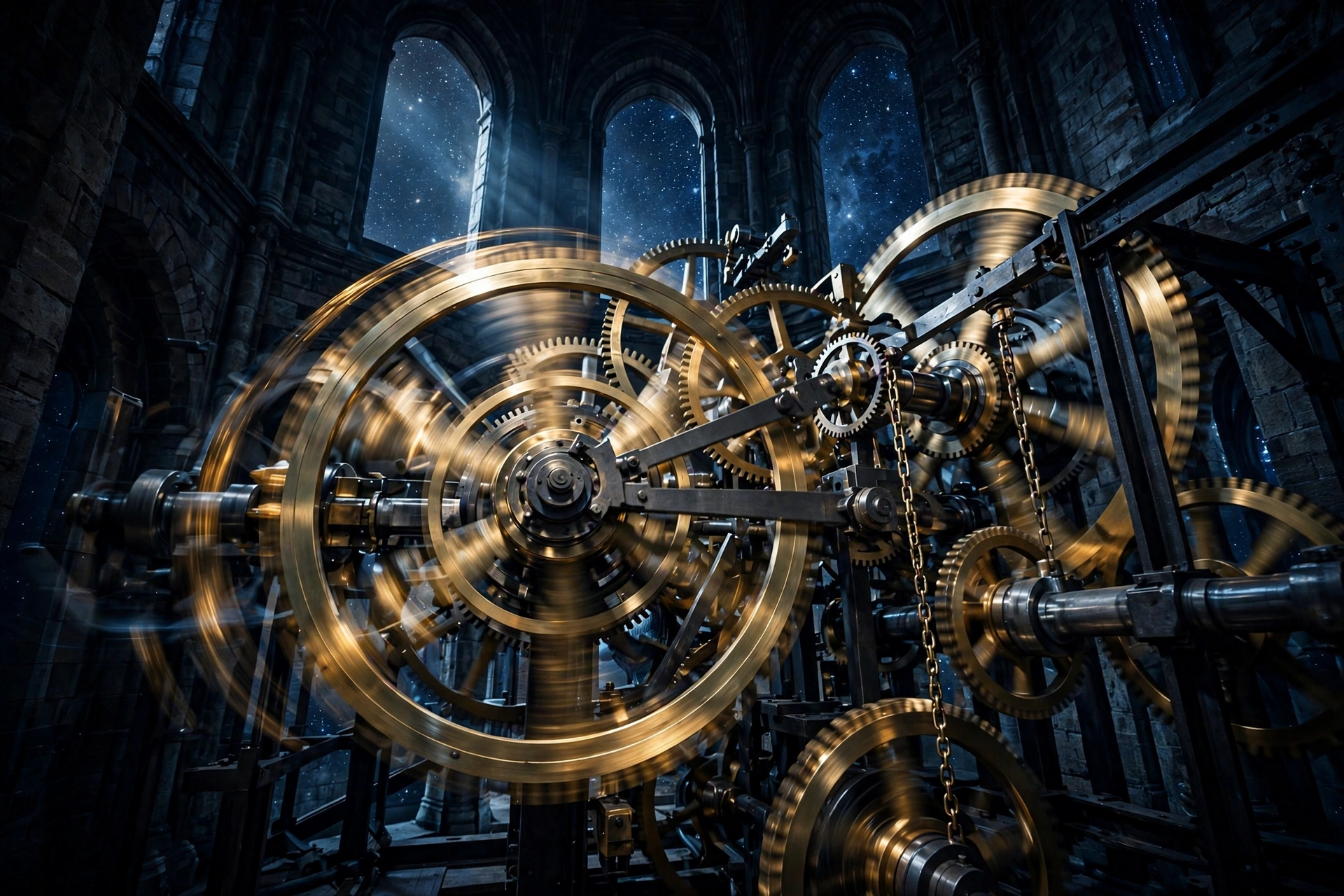
Clockwork, orbits, and command views — how the work moves through the layers.




See the full Campaign 5.0 visual gallery → · The books behind the crew, in the Library →
Get started
Start with a free evaluation and see how the crew operates — the meter, the layers, and the plain-language reporting, from day one.